

The phrase “farewell to life on Earth” carries deep emotional and existential weight. It refers to the eventual extinction of all biological life on our planet, whether triggered prematurely by human actions or brought about gradually by natural cosmic and geological processes. While immediate concerns like climate change dominate headlines, the long-term fate of Earth is sealed by the laws of astrophysics: our Sun will one day expand and render the planet uninhabitable, and eventually lifeless.
This comprehensive article explores the many pathways that could lead to the end of life on Earth. It examines historical mass extinctions, current human-induced risks, long-term geological and biological shifts, astronomical threats, philosophical perspectives, and potential human responses. By understanding these timelines and mechanisms, we gain perspective on our fleeting presence in the cosmos and the importance of responsible stewardship today.
Related Post: Carla Cute: Adult Entertainment, Early Life, Career And More
Historical Context: Lessons from Past Mass Extinctions
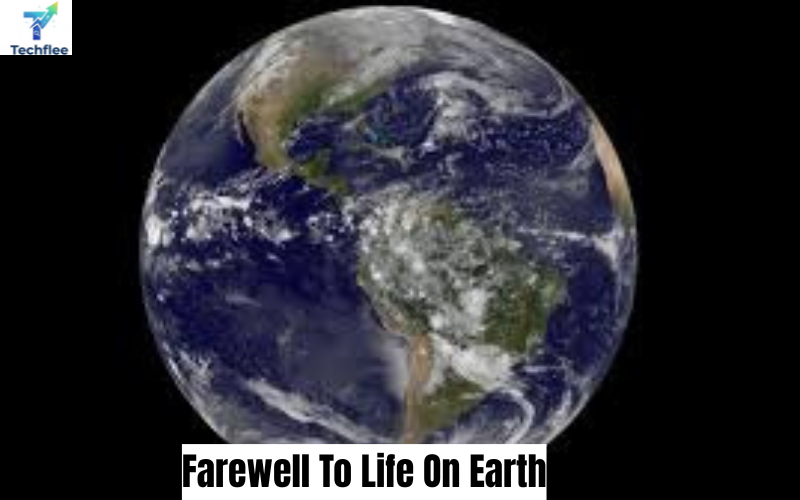
Earth has experienced multiple episodes of widespread species loss throughout its 4.5-billion-year history. These mass extinction events provide critical insights into how fragile ecosystems can collapse under environmental stress and how life has repeatedly recovered—until, perhaps, the final time.
The Big Five Mass Extinctions
Paleontologists recognize five major mass extinction events, known as the “Big Five,” during which at least 75% of species disappeared in a geologically short period.
| Extinction Event | Approximate Timing (Million Years Ago) | Estimated Species Loss | Primary Causes | Key Consequences |
| Ordovician-Silurian | 445–440 | 85% | Global cooling, sea-level fall, possible gamma-ray burst | Devastated marine life, especially invertebrates |
| Late Devonian | 372–359 | 75% | Ocean anoxia, volcanism, asteroid impacts | Severe damage to reefs and early fish |
| Permian-Triassic (“The Great Dying”) | 252 | 96% | Massive Siberian Traps volcanism, methane release, extreme warming | Near-total collapse of marine and terrestrial ecosystems |
| Triassic-Jurassic | 201 | 80% | Central Atlantic volcanism, possible asteroid impact | Cleared path for dinosaur dominance |
| Cretaceous-Paleogene (K-Pg) | 66 | 76% | Chicxulub asteroid impact, Deccan Traps volcanism | Extinction of non-avian dinosaurs, rise of mammals |
The Permian-Triassic event stands out as the most catastrophic, eliminating over 90% of marine species and most land vertebrates. Recovery took millions of years, demonstrating how slowly biodiversity rebuilds after such devastation.
These historical events often involved multiple stressors—volcanic greenhouse gases, ocean acidification, and rapid temperature swings—strikingly similar to conditions emerging today.
Related Post: Kelley Phleger Height, Age, Love, Legacy, and More
Near-Term Threats: Human-Induced Risks

While natural processes guarantee an eventual end to life, humanity now possesses the power to accelerate that timeline dramatically.
Climate Change and Ecosystem Collapse
Anthropogenic global warming, driven primarily by fossil fuel emissions, deforestation, and industrial activity, is already causing rapid biodiversity loss. Current extinction rates are estimated to be 100–1,000 times higher than background levels, qualifying the present era as the sixth mass extinction. Without aggressive mitigation, continued warming could trigger tipping points such as permafrost thaw, Amazon dieback, and ice-sheet collapse, leading to societal disruption and widespread species loss.
In extreme scenarios, runaway greenhouse effects could eventually transform Earth into a Venus-like hothouse, though this would require vastly higher carbon releases than currently projected.
Nuclear Conflict
A large-scale nuclear war could cause immediate loss of life followed by nuclear winter—global cooling from soot blocking sunlight—resulting in agricultural failure and mass starvation.
Pandemics
Natural or engineered pathogens could spread globally with devastating lethality, especially if combined with antimicrobial resistance or deliberate release.
Emerging Technological Risks
Uncontrolled advanced artificial intelligence, nanotechnology mishaps, or biotechnology accidents represent speculative but serious existential threats discussed by researchers and policymakers.
These risks operate on human timescales—decades to centuries—making them the most urgent concerns.
Related Post: Nurshath Dulal: Bio/Wiki, Wealth, Family & Personal Life And More.
Long-Term Geological and Biological Decline
Even without human interference, Earth’s habitability will decline over hundreds of millions to billions of years due to natural processes.
The Faint Young Sun Paradox and Future Brightening
Early in Earth’s history, the Sun was dimmer, yet liquid oceans persisted thanks to a thicker greenhouse atmosphere. Today, the Sun is gradually brightening by about 1% every 110 million years. In approximately 600 million years, carbon dioxide levels will fall below the threshold needed for C3 photosynthesis (used by most plants), causing widespread plant die-off and collapse of food chains.
By 800–900 million years, complex multicellular life will likely cease. Microbial life may persist longer in subsurface refuges.
Moist Greenhouse and Ocean Loss
Around 1 billion years from now, increased solar luminosity will cause a runaway moist greenhouse effect. Water vapor will rise into the upper atmosphere, where ultraviolet radiation splits it into hydrogen (which escapes to space) and oxygen. Oceans will evaporate completely, turning Earth into a desolate, Venus-like world.
End of Plate Tectonics and Magnetic Field
Plate tectonics, vital for carbon cycling and climate regulation, will eventually halt as the interior cools. The geodynamo generating Earth’s protective magnetic field may also weaken significantly within 2–3 billion years, exposing the atmosphere to solar wind erosion.
Astronomical Threats
Beyond Earth-bound processes, cosmic events pose intermittent but potentially catastrophic risks.
Asteroid and Comet Impacts
Large impacts capable of causing mass extinction occur roughly every 100 million years. Modern monitoring and deflection technologies reduce near-term danger, but the threat remains over geological time.
Nearby Supernovae or Gamma-Ray Bursts
A supernova within 30–50 light-years or a directed gamma-ray burst could strip the ozone layer, exposing surface life to lethal ultraviolet radiation.
Stellar Encounters and Orbital Instability
Passing stars could gravitationally perturb planetary orbits. Simulations suggest a small but non-zero chance of major disruption in the next 5 billion years, potentially ejecting planets or causing collisions.
The Sun’s Red Giant Phase
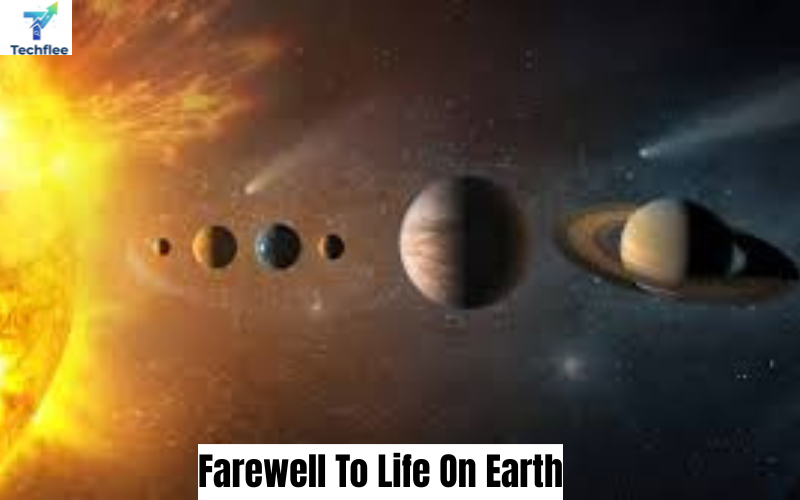
In 5–7 billion years, the Sun will exhaust its core hydrogen, expand into a red giant, and likely engulf Mercury, Venus, and possibly Earth. Even if Earth survives engulfment due to orbital expansion from solar mass loss, surface temperatures will render it sterile long before.
Philosophical and Cultural Reflections
The inevitability of Earth’s eventual lifelessness has profound implications for philosophy, religion, and culture. Existential thinkers grapple with the meaning of life in a finite cosmos. Many spiritual traditions offer hope through transcendence or afterlife. Literature and film—from H.G. Wells’ dying Sun in The Time Machine to modern apocalyptic narratives—explore humanity’s response to impermanence.
This awareness can motivate environmental protection, scientific progress, and the search for meaning in our brief window of existence.
Humanity’s Options: Mitigation and Survival Strategies
While the ultimate fate of life on Earth is unavoidable, the timeline is not fixed in the short term.
Near-term actions include rapid decarbonization, biodiversity conservation, pandemic preparedness, nuclear disarmament, and responsible development of advanced technologies.
Longer-term possibilities involve space colonization—establishing self-sustaining habitats on Mars, moons, or interstellar destinations—to ensure life’s continuation beyond Earth.
Related Post: Mary Beougher: Inspiring Bio, Wealth, Family & Leadership Legacy
Timeline of Earth’s Future Habitability
| Milestone | Approximate Timeframe | Outcome |
| Ongoing sixth mass extinction | Present–centuries | Significant biodiversity loss |
| End of C3 photosynthesis | ~600 million years | Collapse of most plant life |
| End of complex multicellular life | ~800 million–1 billion years | Only microbes remain |
| Ocean evaporation (moist greenhouse) | ~1–1.5 billion years | Surface sterilization |
| Magnetic field collapse | ~2–3 billion years | Atmospheric loss accelerated |
| Sun enters red giant phase | ~5–7 billion years | Earth possibly engulfed or scorched |
| Sun becomes white dwarf | ~10+ billion years | Cold, dark remnant |
Key Scientists and Thinkers
Carl Sagan (1934–1996)
Astronomer, cosmologist, and science communicator. Popularized the fragility of Earth through works like Cosmos and Pale Blue Dot, emphasizing our responsibility to preserve the only known home of life.
Stephen Hawking (1942–2018)
Theoretical physicist. Warned of existential risks including climate change, nuclear war, and artificial intelligence. Strongly advocated spreading humanity to other planets to ensure long-term survival.
Related Post: Mary Beougher: Inspiring Bio, Wealth, Family & Leadership Legacy
FAQs
What does “farewell to life on Earth” refer to?
It encompasses both the potential early extinction of complex life due to human or natural disasters and the inevitable long-term sterilization of the planet by solar evolution.
When will all life on Earth end?
Complex life likely ends within 1 billion years; microbial life may persist until 2–4 billion years; the planet itself becomes uninhabitable long before the Sun’s red giant phase in ~7 billion years.
Are we currently causing a mass extinction?
Yes. The current rate of species loss marks the sixth mass extinction, driven primarily by human activity.
Could an asteroid end life soon?
A civilization-threatening impact is unlikely in the next few centuries, but remains possible over longer periods.
Will the Sun definitely destroy Earth?
The Sun will expand and render Earth uninhabitable. Whether Earth is physically engulfed depends on orbital dynamics, but the outcome for life is the same.
Conclusion
The story of life on Earth is one of astonishing resilience amid repeated crises, yet it is fundamentally temporary. From volcanic cataclysms of the past to the Sun’s inexorable brightening in the future, natural forces guarantee an eventual farewell. Human actions now determine whether that farewell arrives prematurely or whether we extend life’s tenure on this planet for millions more years—and perhaps carry it to the stars.
Recognizing our cosmic impermanence need not breed despair. Instead, it can inspire awe, responsibility, and purpose. In safeguarding Earth’s biosphere today and exploring pathways beyond it tomorrow, we honor the rare and precious phenomenon of life in an indifferent universe.