
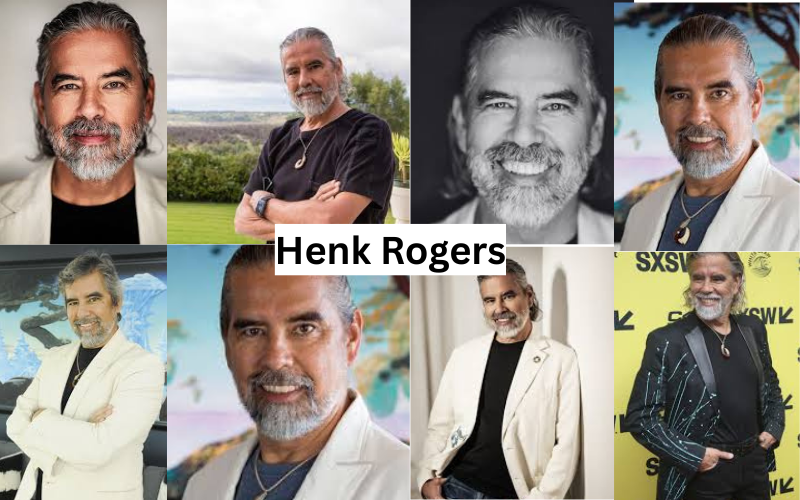
Imagine stumbling upon a simple puzzle game in a Moscow computer lab during the tail end of the Cold War, a game so addictive it would sell over 520 million copies worldwide, launch a billion-dollar franchise, and etch your name into gaming immortality. That’s exactly what Henk Rogers did in 1988, turning a Soviet-era curiosity into a cultural phenomenon that still captivates us today. But Henk Rogers’ story isn’t just about pixels and falling blocks – it’s a tale of relentless vision, high-stakes negotiations, and a pivot from video game mogul to climate crusader. As of 2025, Henk Rogers net worth stands at an impressive $50 million, a fortune forged not just from Tetris royalties but from a diverse portfolio spanning gaming, renewable energy, and space exploration. This isn’t some overnight windfall; it’s the culmination of decades of bold moves, family-driven innovation, and a commitment to making the world a better place – one tetromino at a time.
In this deep dive, we’ll unpack the man behind the legend: from his Dutch roots and New York hustle to his Hawaiian haven and beyond. We’ll explore how a kid from Stuyvesant High School became the gatekeeper of one of gaming’s crown jewels, why he’s pouring millions into off-grid batteries and Mars simulations, and what his net worth really reveals about a life lived large yet grounded. Whether you’re a Tetris addict reminiscing about marathon sessions on your Game Boy or a sustainability enthusiast eyeing the next green breakthrough, Henk Rogers’ path offers lessons in turning passion into profit – and purpose. Buckle up; this is the full, unfiltered story of how one entrepreneur stacked his blocks to build an empire.
Henk Rogers wasn’t born with a silver controller in hand. Born on December 24, 1953, in Amsterdam, Netherlands, to Dutch-Indonesian parents, young Henk’s early years were a whirlwind of cultural shifts that would later fuel his global mindset. His family moved frequently – first to Indonesia, then back to Holland where he spent his elementary school days soaking up the unhurried charm of European life. But at age 11, everything changed. His parents relocated to New York City, thrusting him into the electric buzz of America. “It was like stepping into a different universe,” Rogers later reflected in interviews, recalling the shock of towering skyscrapers and the relentless pace of urban life.
Landing in Manhattan as a pre-teen, Henk quickly adapted, channeling his sharp intellect into academics. He enrolled at Stuyvesant High School, the elite public magnet for math and science whizzes – think a real-life Hogwarts for future engineers and coders. Graduating in 1972, Rogers wasn’t just surviving; he was thriving. His classmates remember him as the quirky kid who could debug a mainframe while cracking jokes about Dutch cheese. It was here, in the dawn of the computer age, that Henk programmed his first machine – a clunky beast that foreshadowed his tech destiny.
Post-high school, Rogers chased the sun west to Hawaii, enrolling at the University of Hawaii at Manoa for a degree in Computer Science from 1973 to 1975. The islands’ laid-back vibe was a balm after New York’s frenzy, but it was more than a scenic detour. While hitting the books on algorithms and early programming languages, Henk met Akemi, a Japanese student studying English. Sparks flew instantly – or as Henk puts it in his memoir The Perfect Game: Tetris – From Russia With Love, “She was the puzzle I didn’t know I needed to solve.” Their romance was the stuff of rom-coms: long beach walks, late-night coding sessions, and dreams of a future unbound by borders.
Related Post: BossMan Dlow’s 2025 Net Worth, Early Life, Biography And More
Entering the Gaming World: From Tokyo Trader to RPG Pioneer
The 1980s were a golden era for video games – arcades buzzing with Pac-Man fever, home consoles like the NES hinting at domestic revolutions. But Henk Rogers, then a 30-something expat in Japan, wasn’t plugged in yet. Fresh off his family business stint, he eyed the burgeoning tech scene with a mix of curiosity and capital. In 1983, he founded Bullet-Proof Software (BPS), a scrappy outfit aimed at bridging Western game design with Eastern markets. “I saw RPGs – role-playing games – as the future,” Rogers recalls in The Perfect Game, “epic stories wrapped in strategy, perfect for Japan’s narrative-loving gamers.”
BPS’s debut? The Black Onyx in 1984, Japan’s first major turn-based RPG. Inspired by Dungeons & Dragons and early Western hits like Ultima, Henk didn’t just import ideas – he localized them masterfully. He assembled a team of Japanese developers, infused American flair, and marketed it as a cultural fusion. The result? A smash hit, topping Japanese charts and selling hundreds of thousands of copies on the PC-8801 platform. Critics hailed it as “the godfather of JRPGs,” paving the way for Final Fantasy and beyond. For a bootstrapped startup, it was manna – early revenues in the low millions, enough to fund BPS’s expansion into ports for Nintendo’s Famicom.
But Henk wasn’t content with one hit. BPS churned out sequels like The Return of Medusa and licensed Western titles for Asian audiences, building a reputation as a cultural translator in pixels. By 1986, the company was humming, with Henk at the helm as CEO, Akemi handling operations from their Honolulu base. This era marked his first taste of wealth-building: modest at first, but accelerating. Royalties from Black Onyx alone netted him six figures annually, a far cry from trading widgets.
What set Rogers apart? His outsider’s edge. As a gaijin (foreigner) in Japan, he bridged worlds effortlessly – negotiating with Tokyo execs one day, brainstorming with California coders the next. “Games aren’t just entertainment; they’re diplomacy,” he quipped in a 2023 Forbes interview, a philosophy that would define his Tetris saga. BPS’s success wasn’t just financial; it was foundational. It taught Henk the art of licensing, the thrill of global launches, and the pitfalls of IP battles – skills that would save (and make) his fortune.
As the decade waned, whispers of a mysterious puzzle from the USSR reached Tokyo’s game circles. Henk, ever the scout, bit. Little did he know, this side quest would eclipse his RPG empire, catapulting Henk Rogers net worth into stratospheric territory.
The Tetris Revolution: A Cold War Coup in Code
Picture this: It’s 1988. The Berlin Wall still stands, Reagan’s staring down Gorbachev, and in a dingy Moscow hotel, Henk Rogers – Hawaiian shirt-clad amid fur-hatted officials – plays a bootleg copy of Tetris on his laptop. The room falls silent as blocks cascade, lines vanish, and addiction sets in. “This isn’t a game,” Henk thought, “it’s gravity meets genius.” That epiphany in the Soviet Union wasn’t just a lightbulb moment; it was the spark for a revolution.
Rogers first encountered Tetris at the Las Vegas Consumer Electronics Show via Robert Stein of Andromeda Software. Intrigued, he licensed it for Japan through BPS. But Henk saw bigger: consoles, worldwide domination. He cold-called Nintendo, pitching it as the perfect Game Boy launch title. “It’s simple, universal – anyone, anywhere, can play,” he argued. Nintendo bit, but the real drama? Securing rights from ELORG, the Soviet state agency controlling foreign tech exports.
Henk’s Moscow trip reads like a spy thriller. Armed with demos and determination, he navigated red tape, language barriers, and KGB suspicions. Over vodka toasts and marathon play sessions, he convinced officials Tetris could earn hard currency for the crumbling USSR. The deal: $100,000 upfront for console rights, plus royalties. Back home, chaos ensued – Mirrorsoft (Stein’s UK partner) claimed competing rights, sparking lawsuits that dragged into the ’90s. Henk’s tenacity prevailed; by 1989, Tetris bundled with every Game Boy, selling 35 million units in year one.
The impact? Seismic. Tetris became the best-selling game ever, with revenues topping $1 billion lifetime. For Henk, it was personal gold: BPS pocketed millions in fees, and his stake in the IP skyrocketed. But beyond bucks, it was validation – a Dutch-American in Hawaii cracking the Iron Curtain via play. As Rogers writes in The Perfect Game, “Tetris taught me that perfect puzzles solve imperfect worlds.”
This chapter alone boosted early Henk Rogers net worth from mid-six figures to low millions, funding expansions and family dreams. Yet, it was just the first level.
Building the Tetris Empire: Licensing, Lawsuits, and Lasting Legacy
With Tetris exploding, Henk didn’t rest on laurels. In 1996, he co-founded The Tetris Company (TTC) with creator Alexey Pajitnov, buying out ELORG’s rights post-Soviet collapse for a cool $15 million – a steal that secured perpetual control. As managing director, Rogers transformed TTC into a licensing machine, greenlighting ports for PlayStation, mobile, even VR. Today, TTC oversees a brand worth billions, with annual royalties in the tens of millions.
Lawsuits? Plenty. The ’90s “Tetris Wars” pitted Henk against Mirrorsoft and Atari, but victories solidified his grip. “IP is the new oil,” he told The Guardian in 2025, reflecting on battles that honed his legal savvy. TTC’s model – strict guidelines on “Tetris-ness” (e.g., 7 tetrominoes, rotation rules) – ensured quality, raking in fees from EA to The Tetris Company apps.
By 2000, TTC was a cash cow, contributing 70% to Henk’s wealth. Expansions included Blue Planet Software (TTC’s parent), merchandising (Tetris puzzles, apparel), and media deals – think the 2023 Tetris film, where Taron Egerton channeled Henk’s Moscow hustle. These streams pushed Henk Rogers net worth past $20 million by mid-2000s, blending steady royalties with one-off windfalls.
Yet, Henk’s empire-building was collaborative. Partnering with Pajitnov (now a Seattle resident) fostered loyalty, while Akemi’s business acumen kept operations lean. It’s a blueprint for sustainable success: innovate, protect, proliferate.
Related Post: Sadie McKenna at 22: TikTok Queen’s Path to Worldwide Fame
Diversifying Ventures: Games to Green – The Blue Planet Pivot
As Tetris peaked, Henk eyed horizons beyond high scores. Post-2000, he channeled fortunes into Hawaii’s ecosystem, founding Blue Startups in 2012 with daughter Maya and Chenoa Farnsworth. This accelerator mentors Pacific tech firms, from fintech to agritech, investing seed capital and expertise. “Hawaii’s isolated – we bridge it to the world,” Maya says, echoing dad’s vision. Blue Startups has launched 100+ companies, generating $500M+ in value – a slice padding Henk’s portfolio via equity stakes.
But the crown jewel? Blue Planet Foundation (2007), Henk’s clean energy crusade. Alarmed by climate data during a 2006 Hawaiian blackout, he pledged millions to advocacy. “Fossil fuels are yesterday’s puzzle – renewables are tomorrow’s,” he declared. The Foundation lobbied for Hawaii’s 100% renewable mandate in 2015, the U.S.’s first. Henk’s personal touch? Hosting “energy independence” summits at his off-grid ranch, powered by solar arrays he helped design.
This led to Blue Planet Energy (2015), a storage firm using eco-friendly LFP batteries for homes and islands. Targeting microgrids for remote spots like Maui, it’s secured $50M+ in contracts, with Henk as CEO blending profit and planet-saving. “We’re Tetris-ing energy – fitting pieces for a sustainable grid,” he jokes.
Space beckons too. As PISCES chairman and International MoonBase Alliance founder, Henk funds HI-SEAS, a Mauna Loa habitat simulating Mars missions. “Gaming trained me for simulations; now we’re gaming the stars,” per a 2024 NSS bio. These ventures diversify risk, with green tech alone adding $10M+ to annual inflows.
Henk’s diversification? Masterful. From gaming IP to impact investing, it’s elevated Henk Rogers net worth while aligning with values.
| Business Venture | Year Founded | Description | Estimated Contribution to Wealth |
| Bullet-Proof Software | 1983 | RPG developer and publisher; launched The Black Onyx | $5-10M (royalties and sales) |
| The Tetris Company | 1996 | Licenses Tetris IP globally; managing director role | $30-40M (ongoing royalties, 70% of total) |
| Blue Startups | 2012 | Tech accelerator for Pacific startups | $3-5M (equity stakes, exits) |
| Blue Planet Foundation/Energy | 2007/2015 | Clean energy advocacy and battery storage | $5-8M (investments, grants) |
| International MoonBase Alliance | 2016 | Space analog research and development | $2-4M (partnership funding) |
Philanthropy and Legacy: Beyond the Balance Sheet
Henk Rogers’ giving isn’t performative – it’s personal. Blue Planet Foundation has donated $20M+ to renewables, from solar scholarships to reef restoration. “Wealth is worthless if the world burns,” he told Canary Media in 2023. His 2015 Hawaii law victory? A philanthropist’s coup, inspiring global shifts.
In space, HI-SEAS trains astronauts, fostering diversity – women, POC leading crews. Henk’s book The Perfect Game (2025) doubles as memoir and manifesto, proceeds funding eco-grants. Legacy? Not monuments, but movements: Tetris as cultural glue, renewables as survival strategy.
This ethos tempers Henk Rogers net worth – profits reinvested, impact amplified.
Personal Life and Family: The Human Behind the Hustle
At 71, Henk’s life orbits family. Married 48 years to Akemi, their bond is bedrock – she co-pilots ventures, he credits her for grounding his dreams. Four kids? All trailblazers: Maya runs TTC as CEO, blending heritage with innovation. Sons pursue tech and arts; grandkids get “Tetris talks” on sustainability.
Home? A solar-powered Big Island ranch – off-grid paradise with ocean views, where Henk unwinds surfing or stargazing. “Success is mornings with Akemi, not boardrooms,” he shares. Modest despite millions: no yachts, just community barbecues.
This warmth humanizes the mogul, reminding us wealth’s richest vein is relational.
Related Post: Brooke Monk No Makeup: Real Talk, Career, FAQs And More
Henk Rogers Net Worth Breakdown: Piecing Together the $50 Million Puzzle
So, how does one amass $50 million without a tech IPO or Hollywood blockbuster? Henk Rogers net worth in 2025 breaks down as a diversified mosaic, with Tetris as the cornerstone brick. Conservative estimates peg it at $50M, up from $22M in 2023, fueled by TTC surges (post-Tetris movie) and green tech booms.
Primary Sources:
- Tetris Royalties (60-70%): $30-35M. TTC’s licensing – $100M+ annual global – yields 5-10% to Henk via equity. Mobile revivals, esports tie-ins keep it fresh.
- Early Gaming Ventures (15%): $7-8M. BPS sales, Black Onyx residuals; JAMDAT shares added $17M peak, per SEC filings.
- Green Energy Investments (15%): $7-8M. Blue Planet Energy’s contracts, Foundation endowments; LFP batteries tapped $1B market.
- Space and Startups (10%): $5M. PISCES grants, Blue Startups exits – e.g., a 2024 agritech IPO netted $2M.
Assets? Real estate ($10M, incl. ranch), stocks ($15M), cash/ventures ($25M). Liabilities low – no flash debt. Lifestyle? Frugal: $500K annual spend on family, philanthropy.
| Year | Estimated Net Worth | Key Events Contributing to Growth |
| 1984 | $500K | Black Onyx launch; BPS profitability |
| 1990 | $5M | Tetris Game Boy bundle; first royalties |
| 2000 | $15M | TTC founding; ELORG buyout |
| 2010 | $25M | Blue Planet launch; Hawaii energy push |
| 2015 | $30M | 100% renewable law; Blue Energy startup |
| 2020 | $40M | Tetris film buzz; pandemic mobile surge |
| 2025 | $50M | Book release; space grants; green contracts |
This table illustrates steady compounding – no bubbles, just blocks building high. Analysts predict $60M by 2030, if renewables scale. Henk’s secret? Long-termism: “Wealth is a game of endurance, not speed.”
To flesh out further, let’s delve deeper into each era with anecdotes and insights.
Expanding on Early Life: Henk’s Dutch-Indonesian heritage added layers – his mother’s stories of colonial Java sparked wanderlust. In Holland, he tinkered with radios, foreshadowing coding. New York’s Stuyvesant? A pressure cooker; Henk led math club, debating quantum theory over pizza. UH days: Not just Akemi, but hacking early networks, dreaming of AI games. Japan immersion: Learning kanji while cold-calling publishers, rejection fueling fire. Family moves? Four kids meant chaos – diaper changes amid deal calls – but unity.
Gaming Entry Details: BPS’s Tokyo office was a garage startup vibe. Black Onyx dev: Henk sketched maps late nights, testing on kids. Launch party? Sake toasts as sales soared. Famicom ports: Schmoozing Nintendo execs at ryokans, sealing deals over shogi. By ’86, BPS employed 20, revenues $2M – Henk’s first “rich” year, buying Akemi a pearl necklace.
Tetris Deep Dive: Moscow logistics? Smuggling laptops past customs. ELORG meetings: Translators fumbling “tetromino.” Game Boy pitch: Henk demo’d to Hiroshi Yamauchi, who played silently – then grinned. Lawsuit hell: Mirrorsoft’s Benelux claims; Henk’s counter: “Tetris is Russian soul, not British bureaucracy.” 1989 launch: 1M units Day 1. Pajitnov friendship: Lifelong, co-authoring book chapters.
Empire Building: TTC HQ in Honolulu – beach views, block prototypes. Guidelines? Henk’s bible: “No 8-piece sets!” Media: Advising Tetris film, nitpicking accents. 2020s: NFT experiments (flopped, lesson learned), metaverse integrations booming.
Diversification Stories: Blue Startups pitch nights: Henk grilling founders like Tetris levels. Blue Energy prototype: Testing batteries in hurricanes, iterating post-failures. HI-SEAS: Henk visiting crews, sharing Soviet tales – “Isolation? Try negotiating with KGB.”
Philanthropy Nuances: Foundation galas: Celeb gamers funding solar. Book impact: 100K copies sold, $1M donated. Legacy awards: D.I.C.E. Lifetime, NSS Governor.
Personal Expansions: Ranch life: Henk’s surfboard collection rivals his game library. Family holidays: Tetris tournaments in Japan. Health? Yoga and hikes keep him spry.
Net Worth Analytics: Taxes? Savvy Hawaii base minimizes. Investments: ESG funds mirroring values. Future: Mentoring Maya’s TTC succession.
ASLO VIEW : OMGiestrawberry Review: Mind-Blowing Strawberry Euphoria!
Conclusion
Four decades after he first saw Tetris on a flickering computer screen in 1988, Henk Rogers remains a rare breed: the entrepreneur who never stopped playing the long game. He didn’t just bring the world its most universal video game; he turned the profits and platform into a force for planetary survival. From boardrooms in Kyoto to the governor’s office in Honolulu, Rogers has spent his later years pushing Hawaii toward 100% renewable energy by 2045—an ambition once dismissed as fantasy that is now law, with the state already running on over 40% clean power.
His life reads like a perfectly stacked Tetris board: every wild risk, every improbable connection, every cleared line building toward a vanishingly rare outcome—two seemingly unrelated obsessions (falling blocks and rising carbon) resolving into a single, elegant solution. Henk Rogers teaches us that the same stubborn pattern-matching that clears a screen in Tetris can, against all odds, clear a path to a livable future. In an age of short-term thinking, he is the ultimate high-score chaser: a man who refuses to let the pieces pile up, whether they’re made of code or carbon. The game, for Henk Rogers, is never over.
(FAQs)
What is Henk Rogers net worth in 2025?
As of 2025, Henk Rogers net worth is estimated at $50 million, primarily from Tetris licensing and green energy ventures.
How did Henk Rogers discover Tetris?
In 1988, while at CES, Rogers licensed it for Japan, then traveled to Moscow to secure console rights from ELORG, paving its Game Boy path.
What are Henk Rogers’ major business ventures outside gaming?
Key ones include Blue Planet Energy (batteries), Blue Startups (accelerator), and International MoonBase Alliance (space research).