
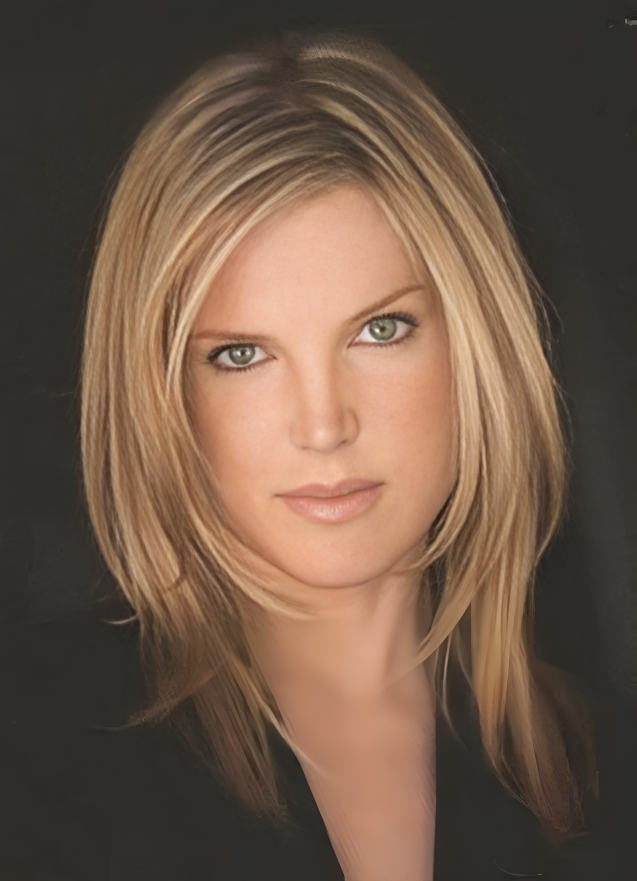
In the glittering yet often unforgiving world of Hollywood, few stories capture the raw interplay of tragedy, resilience, and reinvention quite like that of Louise Stratten. Born into a family marked by both ambition and heartbreak, Louise Stratten emerged from the devastating shadow of her sister Dorothy’s murder to carve out her own path in the entertainment industry. As an actress, producer, and writer, she has collaborated on projects that echo the dramatic twists of her personal life. This article delves deep into the life of Louise Stratten, exploring her early years, the seismic impact of her sister’s death, her complex relationship with acclaimed director Peter Bogdanovich, and her contributions to cinema. Through personal reflections, controversies, and triumphs, we uncover how Louise Stratten transformed adversity into a legacy of quiet strength.
Early Life: Growing Up in Vancouver’s Humble Beginnings
Louise Stratten was born on May 8, 1968, in Vancouver, British Columbia, Canada, into a working-class family of Dutch immigrants. Her parents, Simon and Nelly Hoogstraten (often called Nellie), had emigrated from the Netherlands seeking better opportunities, but life in Canada remained challenging. The Hoogstraten household was modest, characterized by financial struggles and an unstable environment. Louise was the youngest of three siblings: her brother John Arthur arrived in 1961, and her older sister Dorothy in 1960. Dorothy, with her striking beauty and charismatic personality, would later become a symbol of the era’s glamour as a Playboy Playmate, but in their childhood home, the focus was on survival.
Louise has reflected on the unease of their upbringing, describing erratic meals and the presence of various men in their mother’s life, which added layers of instability. Despite these hardships, the sisters shared a close bond. Dorothy, eight years older, acted as a protective figure, shielding Louise from the harsher realities. Vancouver’s rainy streets and tight-knit immigrant community shaped their early years, instilling a sense of resilience that would prove invaluable later. Education was sporadic for the family, but Dorothy’s discovery at a local Dairy Queen by promoter Paul Snider marked the beginning of her ascent—and unwittingly, the family’s entanglement with Hollywood’s darker underbelly.
As Louise entered her teens, Dorothy’s modeling career took off. She moved to Los Angeles in 1978, leaving Louise behind in Canada. The separation was tough, but Dorothy’s success brought hope and financial relief to the family. Louise, still a child, idolized her sister, unaware of the dangers lurking in the fast-paced world Dorothy was entering. By 1980, when Louise was just 12, the family’s world shattered. Dorothy, now 20 and Playboy’s Playmate of the Year, was murdered by Snider in a horrific crime of passion. The details were gruesome: Dorothy was raped and shot with a shotgun, and Snider turned the weapon on himself.
Louise was supposed to accompany Dorothy to that fateful meeting at the apartment but had a gut feeling to stay behind. “To this day, I don’t know why. I remember hearing a small voice inside me telling me to stay behind,” she later shared in reflections on the tragedy. This intuition saved her life, but the loss left an indelible scar. The murder not only devastated the family but thrust them into the media spotlight, with tabloids sensationalizing Dorothy’s Playboy ties and her affair with director Peter Bogdanovich. For young Louise Stratten, the grief was compounded by public scrutiny, marking the first of what she calls her “three traumas.”
In the aftermath, the Stratten family grappled with mourning and legal battles over Dorothy’s estate. Bogdanovich, who had been romantically involved with Dorothy during the filming of They All Laughed (1981), stepped in to support them. He covered expenses for Louise’s private schooling and modeling classes, providing stability amid chaos. This act of kindness laid the foundation for a deeper connection, but it also sowed seeds of controversy.
The Shadow of Tragedy: Dorothy’s Murder and Its Lasting Echoes
Dorothy Stratten’s story is one of Hollywood’s most tragic tales—a rags-to-riches ascent marred by exploitation and violence. Discovered by Snider, a small-time promoter with shady connections, Dorothy was groomed for Playboy. Hugh Hefner himself saw star potential in her, dubbing her the next Marilyn Monroe. But Snider’s jealousy festered as Dorothy’s affair with Bogdanovich blossomed. The 1980 murder-suicide shocked the world, inspiring films like Bob Fosse’s Star 80 (1983) and books that dissected the Playboy empire’s role.
For Louise Stratten, the loss was personal and profound. She has described it as the “brutal murder of my beloved sister,” a trauma that reshaped her life. In a 2009 meeting at the Playboy Mansion, Hefner tearfully apologized to Louise, admitting regret over banning Snider from the mansion, which may have escalated his desperation. “My biggest regret… I shouldn’t have banned Paul from the mansion,” Hefner confessed, highlighting how Dorothy was “poised to become a big star.” Louise’s response was measured, pointing out the irony of Hefner’s empire built on objectifying young women.
The family’s stepfather, Burl Eldridge, even accused Bogdanovich of improprieties with Louise, claims that fueled tabloid frenzy. Yet Louise has defended their bond as one forged in shared grief. Dorothy’s death not only ended a promising life but also propelled Louise into a surrogate role within Hollywood circles, setting the stage for her own entry into the industry.
| Timeline of Key Events in Louise Stratten’s Life |
| Date |
| May 8, 1968 |
| August 14, 1980 |
| 1980s |
| December 30, 1988 |
| 2001 |
| 2009 |
| 2012 |
| 2014 |
| 2019 |
| 2022 |
| 2024 |
This timeline illustrates how Louise Stratten’s life pivoted from personal loss to professional pursuits.
A Controversial Union: Marriage to Peter Bogdanovich
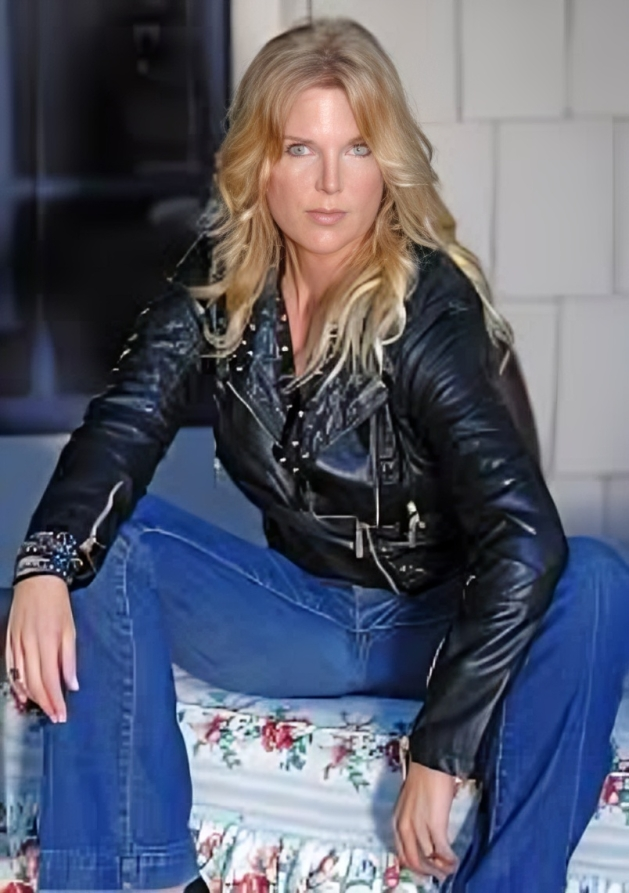
Peter Bogdanovich, the visionary director behind classics like The Last Picture Show (1971) and Paper Moon (1973), entered Louise Stratten’s life through Dorothy. Their affair during They All Laughed was passionate but doomed. After the murder, Bogdanovich’s grief mirrored the family’s. He began writing The Killing of the Unicorn (1984), a memoir blaming Snider, Hefner, and Playboy for Dorothy’s exploitation.
Louise, then a teenager, moved to Los Angeles under Bogdanovich’s care. What started as mentorship evolved into romance. In 1988, at 49, he married 20-year-old Louise Stratten, igniting a media storm. Hefner accused Bogdanovich of seducing her at 13, allegations Bogdanovich vehemently denied, suing successfully for defamation. Louise has called these rumors “ironic,” given Hefner’s own history.
Their marriage lasted until 2001, but they reconciled later. Louise appeared in Bogdanovich’s films, billed as L.B. Stratten, blending personal and professional lives. “I loved her before I was in love with her,” Bogdanovich once said. The union faced bankruptcy and career slumps but produced creative collaborations. Bogdanovich’s death in 2022 left Louise to steward his archives, including podcasts like One Handshake Away.
Controversies aside, their story humanizes the age-gap dynamics in Hollywood, where power imbalances often blur lines. Louise Stratten’s reflections in recent essays reveal a love born from mutual healing: “Then came the gossip, scrutiny, and unwanted publicity after marrying, divorcing, re-uniting with, and now mourning my partner in life, Peter.”
Building a Career: Acting, Producing, and Writing in Film
Despite her personal upheavals, Louise Stratten forged a career in entertainment, often behind the camera. Her acting roles are selective but impactful. In Quentin Tarantino’s Django Unchained (2012), she had a small part, showcasing her poise amid ensemble casts. City Island (2009), a family drama, highlighted her dramatic range, while It Chapter Two (2019) tied her to horror blockbusters.
Her producing and writing credits shine brighter. Co-writing She’s Funny That Way (2014) with Bogdanovich—a screwball comedy reminiscent of his early work—demonstrated her storytelling chops. The film, starring Owen Wilson and Jennifer Aniston, explored tangled romances, mirroring aspects of her life. Louise also executive produced projects tied to Bogdanovich’s legacy, like documentaries on his career.
| Selected Filmography of Louise Stratten |
| Year |
| 2001 |
| 2009 |
| 2012 |
| 2014 |
| 2018 |
| 2019 |
This table captures highlights, emphasizing her multifaceted roles. Louise Stratten’s work often intersects with themes of loss and redemption, reflecting her experiences. Though not a household name, her contributions add depth to indie and mainstream cinema.
Expanding on her career trajectory, Louise’s entry into acting came post-marriage, leveraging Bogdanovich’s networks. In Fallen Angels (1993-1995), an anthology series, she explored neo-noir tales, honing her craft in short-form narratives. Producing allowed creative control; Squirrels to the Nuts (2014), another Bogdanovich project, evolved from She’s Funny That Way, underscoring her influence. Critics noted her subtle presence, praising authenticity born from real-life drama.
In interviews, Louise emphasizes privacy, avoiding the spotlight Dorothy embraced. Her net worth, estimated at $1-5 million as of 2025, stems from film residuals, producing deals, and Bogdanovich’s estate management. This financial independence underscores her evolution from dependent teen to self-sustaining artist.
Personal Life, Reflections, and Current Endeavors
Beyond headlines, Louise Stratten’s personal life is one of introspection. Divorced from Bogdanovich but reunited until his 2022 death, she navigated “love, legacy, and wreckage.” No children from the marriage, she focused on step-parenting his daughters from his first wife, Polly Platt. Today, at 57, Louise lives privately, perhaps in Los Angeles, managing Bogdanovich’s archives and podcasts.
Recent essays in Air Mail offer rare insights, framing her as a survivor of multiple losses. She addresses Hefner’s apology and refutes grooming claims, asserting agency: “We connected over our shared grief.” Philanthropy, particularly aiding victims of domestic violence, aligns with her experiences, though details remain low-key.
Louise Stratten’s story challenges Hollywood stereotypes, portraying a woman who turned pain into purpose without seeking fame.
ASLO VIEW :Dani Sorrento
Conclusion
Louise Stratten’s journey—from the tragedy of Dorothy’s murder to a marriage fraught with controversy and a career of understated achievements—embodies resilience. In a town that devours its own, she has quietly persisted, honoring her sister’s memory while building her own narrative. As she reflects on traumas overcome, Louise Stratten reminds us that strength often lies in silence and survival. Her legacy, intertwined with Bogdanovich’s, continues to inspire, proving that even in Hollywood’s ruins, love and art can endure.
(FAQs)
Who is Louise Stratten?
Louise Stratten is a Canadian actress, producer, and writer, best known as the younger sister of murdered Playboy Playmate Dorothy Stratten and the former wife of director Peter Bogdanovich.
What happened to Dorothy Stratten, and how did it affect Louise?
Dorothy was murdered by her husband Paul Snider in 1980. The tragedy profoundly impacted Louise, who was nearly present, and led to her receiving support from Bogdanovich, shaping her path into Hollywood.
Was Louise Stratten married to Peter Bogdanovich?
Yes, they married in 1988 when she was 20 and he was 49, divorced in 2001, but reconciled until his death in 2022. The union sparked controversies over their age difference.
What is Louise Stratten’s net worth in 2025?
Estimates place her net worth between $1 million and $5 million, derived from film work and estate management.
What are some notable films Louise Stratten has worked on?
Key projects include Django Unchained (2012), She’s Funny That Way (2014, co-writer), and City Island (2009).