

In the vibrant tapestry of 1970s rock and pop, few names evoke as much nostalgia and intrigue as Elliot Lurie. As the lead guitarist, songwriter, and co-lead vocalist for the band Looking Glass, Lurie penned one of the decade’s most unforgettable anthems: “Brandy (You’re a Fine Girl).” This chart-topping single not only catapulted the band to fame but also cemented Lurie’s reputation as a masterful storyteller in song form. But Elliot Lurie’s story extends far beyond that one massive hit. From his humble beginnings in Brooklyn to a successful pivot into film music supervision, and a triumphant return to live performances, Lurie’s career is a testament to resilience, creativity, and the timeless power of good music.
Born on August 19, 1948, in Brooklyn, New York, Elliot Lurie grew up in an era when rock ’n’ roll was exploding onto the scene, influencing young dreamers like him to pick up guitars and chase melodies. As a student at Rutgers University in New Jersey, where he studied sociology, Lurie found his true passion in music. It was here, amid the college scene of the late 1960s, that the seeds of Looking Glass were planted. Lurie, along with fellow students Larry Gonsky on keyboards and vocals, Pieter Sweval on bass, and Jeff Grob on drums, formed the band that would soon capture the hearts of millions.
The name “Looking Glass” itself tells a story of youthful creativity and a touch of psychedelia. As Lurie recounted in an interview, the band was brainstorming in his car one day—perhaps under the influence of the era’s free-spirited vibes—when they glanced at the rearview mirror. “We thought, ‘We are sort of reflections of ordinary folks,’” Lurie said. They toyed with “The Mirrors” before settling on “Looking Glass,” evoking Lewis Carroll’s whimsical world and the reflective nature of their music. This origin story mirrors the band’s sound: accessible yet layered, pop-infused with a garage-band edge that set them apart.
Related Post: Derek Frazier: Early Life, Education, Wiki/Bio Tables And More Info
The Birth of a Hit: Crafting “Brandy (You’re a Fine Girl)”

Elliot Lurie’s crowning achievement as a singer-songwriter came with “Brandy (You’re a Fine Girl),” a song that has endured for over five decades. Written in the upstairs bedroom of a rented farmhouse in Hunterdon County, New Jersey—a sprawling 88-acre property the band shared for just $240 a month—Lurie drew inspiration from personal experience. The melody and lyrics flowed from memories of a high school girlfriend named Randye. “I got the story in my head and had a few lines with a verse,” Lurie explained. But practicality won out: “Randye is a weird name because it can be taken as a male or female name. The song is about a barmaid, so I thought, why don’t I change it to ‘Brandy.’”
The narrative of “Brandy” is a poignant tale of unrequited love: a beautiful barmaid in a port town adored by sailors who shower her with gifts but can never commit, as the sea calls them away. It’s a romantic tragedy wrapped in a catchy, upbeat package, blending storytelling with infectious hooks. Lurie didn’t initially see it as a blockbuster. “When I first finished writing it, I didn’t jump up and down and say, ‘this is a hit,’” he admitted. Yet, its simplicity and emotional depth made it timeless.
Looking Glass’s path to releasing “Brandy” was serendipitous. After catching the ear of Clive Davis, then-president of Columbia Records, the band signed with Epic Records following a showcase gig opening for blues legend Buddy Guy at Manhattan’s Cafe au Go Go. Their self-titled debut album dropped in June 1972, recorded in Memphis and Manhattan. “Brandy” wasn’t even the lead single—”Don’t It Make You Feel Good” flopped—but a Washington, D.C., DJ named Harv Moore spun a test pressing on WPGC-AM/FM, sparking regional frenzy that propelled it to No. 1 on the Billboard Hot 100 in August 1972. It sold over a million copies, becoming one of the year’s most-played radio hits.
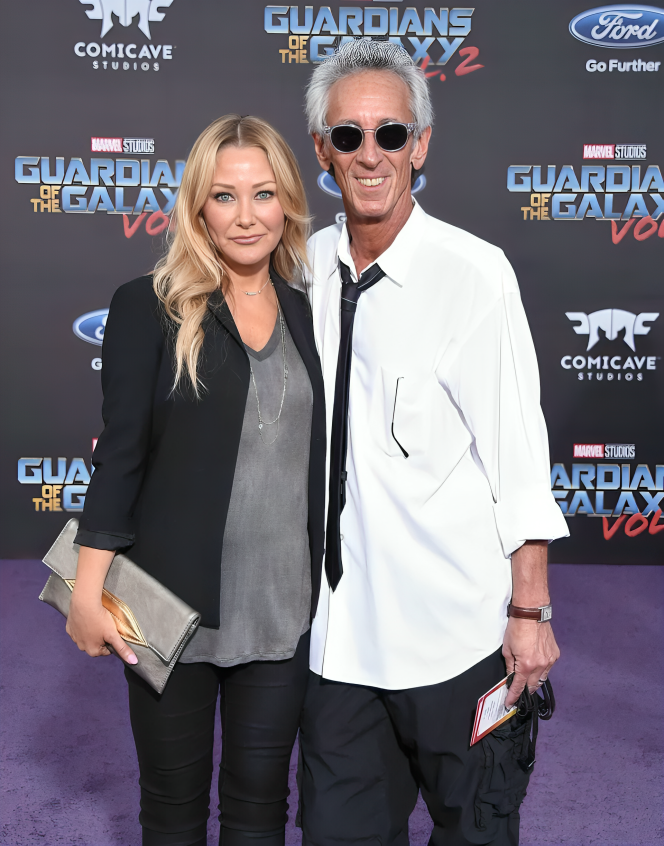
The song’s production added to its charm: Lurie’s distinctive vocals, harmony backups, and a horn section gave it a unique pop-garage hybrid sound. “It sounds a little bit garage band-y, it sounds a little bit pop,” Lurie reflected. “It’s kind different-sounding than some of the other records from the era.” Over the years, “Brandy” has been covered by artists like Kenny Chesney and the Red Hot Chili Peppers, and featured in shows like Charlie’s Angels and The Simpsons. Its pinnacle revival came in 2017’s Guardians of the Galaxy Vol. 2, where Kurt Russell’s character hails it as “possibly Earth’s greatest composition,” introducing it to younger generations.
Fans from the Navy and sailing communities still reach out, sharing how the song resonated during their service in 1972. “I always get emails… ‘I was in the Navy… Everybody played it all the time and we loved it,’” Lurie shared. This connection underscores why “Brandy” endures: it’s more than a hit; it’s a cultural touchstone.
Looking Glass: More Than a One-Hit Wonder

While “Brandy” defined Looking Glass, the band wasn’t a flash in the pan. Their second album, also self-titled in 1973, yielded “Jimmy Loves Mary-Anne,” a Top 40 single peaking at No. 33. Produced by the legendary Arif Mardin, it showcased Lurie’s vocals and has cult status among ’70s fans. Some argue it’s a more sophisticated track than “Brandy,” later covered by new wave artist Josie Cotton.
Lurie addresses the “one-hit wonder” label head-on: “People think we’re a one-hit wonder, but technically we weren’t because that record did enter the Top 40.” The band played frat parties and bars, honing a sound that blended pop accessibility with deeper harmonies. Songwriting was collaborative; Lurie would bring half-formed ideas to the living room, where the group jammed them out. Despite internal dynamics and the pressures of fame, Looking Glass disbanded in 1974 after two albums, as members pursued individual paths.
Related Post: Brooke Monk No Makeup: Real Talk, Career, FAQs And More
Looking Glass Discography Highlights
| Album/Single | Year | Chart Performance | Notes |
|---|---|---|---|
| Looking Glass (Debut Album) | 1972 | #113 Billboard 200 | Features “Brandy (You’re a Fine Girl)” – #1 Hot 100 |
| “Brandy (You’re a Fine Girl)” | 1972 | #1 Billboard Hot 100 | Written and sung by Elliot Lurie; over 1 million copies sold |
| Looking Glass (Second Album) | 1973 | N/A | Includes “Jimmy Loves Mary-Anne” |
| “Jimmy Loves Mary-Anne” | 1973 | #33 Billboard Hot 100 | Produced by Arif Mardin; cult favorite |
Solo Ventures: Chasing New Horizons
Post-Looking Glass, Elliot Lurie dove into a solo career, releasing his self-titled album in 1975 on Epic Records. Backed by elite LA session players from The Crusaders and Toto—hallmarks of yacht rock’s smooth sound—the record earned praise but flopped commercially. Singles like “Disco (Where You Gonna Go)” aimed to catch the era’s dance wave but missed the charts. “I did one solo album for Epic Records that failed miserably and probably rightfully so,” Lurie laughed in reflection.
Undeterred, he signed with Arista Records and penned songs for publishers like Chappell and Screen Gems. In the 1980s, he shifted to private business music production, laying groundwork for his Hollywood leap. The solo album, unavailable for decades, resurfaced on Spotify in recent years, allowing fans to rediscover its yacht rock vibes. Lurie plugs it enthusiastically: “It includes some really, really great yacht rock session players from LA.”
Elliot Lurie Solo Discography
| Release | Year | Label | Key Tracks |
|---|---|---|---|
| Elliot Lurie (Album) | 1975 | Epic Records | “Disco (Where You Gonna Go)”, yacht rock songs |
| “Disco (Where You Gonna Go)” | 1975 | Epic Records | Attempted disco pivot; no chart success |
Related Post: Henk Rogers: Tetris Hero Saving Planet Earth
From Stage to Screen: A Pivotal Shift to Film Music Supervision

In 1984, Lurie relocated to Los Angeles, marking a transformative chapter. By 1985, he headed the music department at 20th Century Fox, producing the soundtrack for Perfect starring John Travolta and Jamie Lee Curtis. His expertise as a music supervisor spanned decades, blending his pop sensibilities with cinematic needs.
Lurie’s credits are impressive, covering blockbusters and cult favorites. He supervised music for Nine 1/2 Weeks, Die Hard, Home Alone, Alien 3, Stuart Little, Spanglish, I Spy, A Night at the Roxbury, Riding in Cars with Boys, Urban Legend, and co-produced elements of The Lizzie McGuire Movie and its theme song. This role demanded curating soundtracks that enhanced narratives, much like his songwriting. “Both creatively and business-wise, I was very lucky,” he noted.
His work on Lizzie McGuire connected back to his pop roots, while films like Guardians of the Galaxy Vol. 2 ironically looped “Brandy” into his professional sphere. After retiring, Lurie reflected on the grind: “I hadn’t really played or sung in 25 years.”
Select Film Music Supervisor Credits for Elliot Lurie
| Film | Year | Role/Notes |
|---|---|---|
| Perfect | 1985 | Produced soundtrack album |
| Nine 1/2 Weeks | 1986 | Music Supervisor |
| Die Hard | 1988 | Music Supervisor |
| Home Alone | 1990 | Music Supervisor |
| Alien 3 | 1992 | Music Supervisor |
| Stuart Little | 1999 | Music Supervisor |
| A Night at the Roxbury | 1998 | Music Supervisor |
| Spanglish | 2004 | Music Supervisor |
| The Lizzie McGuire Movie | 2003 | Co-Producer, Music Supervisor |
Personal Life: Roots, Relationships, and Reflections

Elliot Lurie’s personal life grounds his public persona. Raised in Brooklyn, he credits his sociology background for informing his lyrical insights into human stories. Married to Edi Baker since 2015, he shares affectionate posts calling her “my love, my Lady.” Previously wed to Jeannine Dianne Eldon, Lurie keeps family details private, focusing narratives on music.
In interviews, Lurie exudes humility. On “Brandy’s” legacy: “It’s my one really big hit and if anybody comes out to see me, that’s what they want to hear. I’m perfectly happy to play it for them.” He values live connection: “The most direct connection is still performing live to an audience.” Collaborations with Yacht Rock Revue and Ambrosia keep him engaged.
Related Post: Mattigan Twain Warrior: Family Roots, Wiki Tables And More Info
Conclusion:
Elliot Lurie’s journey—from Rutgers garage jams to Fox Studios boardrooms and back to the stage—illustrates the multifaceted life of a true artist. As an Elliot Lurie singer-songwriter, his ability to weave stories into hits like “Brandy” has influenced generations, proving that great music transcends time. Whether supervising Home Alone’s festive tunes or strumming acoustically today, Lurie’s contributions resonate. His recent shows, blending originals “as written” with influences from his youth, feel “very personal and intimate.” At 77, he continues performing, a living link to ’70s magic.
In a world of fleeting fame, Lurie’s legacy endures through storytelling—”good, tight storytelling,” as he puts it. Fans can catch him via his official website, where his passion shines anew.
FAQs
Who is Elliot Lurie?
Elliot Lurie is an American singer-songwriter, best known as the lead guitarist and co-lead vocalist of the 1970s band Looking Glass, where he wrote their #1 hit “Brandy (You’re a Fine Girl).” He later became a successful music supervisor in film.
What is the story behind “Brandy (You’re a Fine Girl)”?
Inspired by a high school girlfriend named Randye (changed to Brandy for clarity), the song tells of a barmaid loved by sailors who can’t commit due to their wandering lives. Written in a New Jersey farmhouse, it became a massive hit after regional radio play.
What happened to Looking Glass after their hits?
The band disbanded in 1974 after two albums and hits like “Jimmy Loves Mary-Anne.” Members pursued solo paths, with Lurie transitioning to a solo album and eventually film music.
What films did Elliot Lurie work on as a music supervisor?
Lurie supervised music for films including Alien 3, Spanglish, Home Alone, Die Hard, Stuart Little, and Nine 1/2 Weeks, and produced the Perfect soundtrack.
Is Elliot Lurie still performing?
Yes, after retiring from film work, Lurie returned to live shows in the 2010s, performing vocals and guitar sets of his songs and influences. Check his official website for dates.