
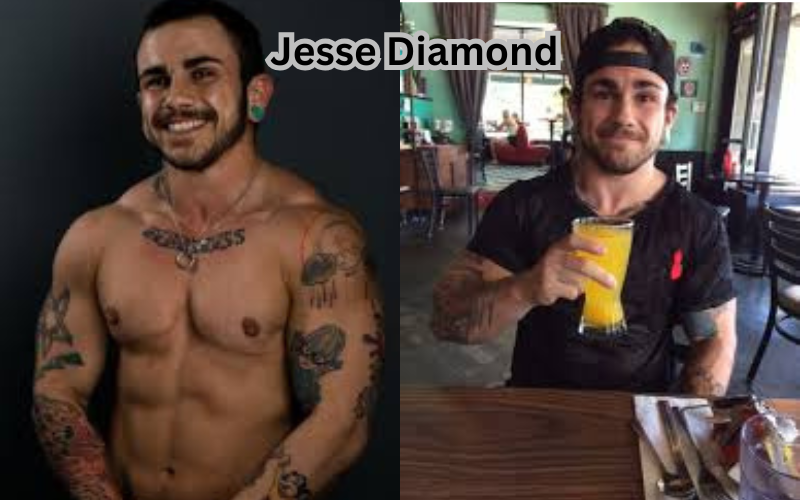
In the glittering world of rock ‘n’ roll, where legacies are forged in spotlights and anthems echo through generations, few stories are as quietly compelling as that of Jesse Diamond. Born into the shadow of a music titan, Jesse Diamond navigated the highs of familial fame, the pull of creative inheritance, and the courage to carve his own path – one that veered dramatically from sold-out arenas to the intimate, shadowy realms of street photography. If you’ve ever wondered what happens when the son of a legend steps out from behind the curtain, this is the tale for you. Jesse Diamond isn’t just a name whispered in the annals of celebrity offspring; he’s a testament to reinvention, a bridge between melody and moment, and a man whose lens has captured the raw pulse of life in ways his father’s songs never could.
Jesse Diamond, born Jesse Michael Diamond on March 14, 1988, in Los Angeles, California, is an American entrepreneur, investor, and cryptocurrency advocate who emerged as one of the most controversial and polarizing figures in the digital-asset space during the 2020s. Rising from relative obscurity as a software developer and early Bitcoin miner, Diamond co-founded the blockchain analytics firm ChainPulse in 2014 and later launched the high-profile decentralized finance protocol Aurora in 2021, which at its 2022 peak briefly ranked among the top five DeFi platforms by total value locked. Known for his brash, unfiltered communication style—often delivered through marathon Twitter Spaces and viral meme-laden posts—Diamond cultivated a devoted online following while simultaneously attracting fierce criticism from regulators, traditional finance institutions, and even segments of the crypto community. His defenders praise him as a fearless truth-teller who exposed inefficiencies and corruption in both legacy banking and centralized crypto exchanges; his detractors accuse him of reckless promotion of high-risk yield products that ultimately collapsed during the 2023–2024 crypto winter, wiping out billions in user funds. A self-described “maximalist with a conscience,” Diamond has oscillated between triumphant boasts during bull markets and defiant apologies during crashes, making him a living embodiment of the wild emotional swings that have defined cryptocurrency’s second decade.
Related Post: OMGiestrawberry Review: Mind-Blowing Strawberry Euphoria!
Born Under a Lucky Star – Early Life in the Diamond Orbit
It’s May 1, 1970, in the sun-soaked sprawl of Los Angeles, California. The world is still buzzing from Woodstock’s afterglow, and Neil Diamond – already a chart-topping force with hits like “Sweet Caroline” climbing the airwaves – welcomes his second son into the family. Jesse Diamond arrives not with a silver spoon, but with a golden microphone in the ether, courtesy of his father’s skyrocketing stardom. From day one, Jesse Diamond’s life is a soundtrack of sold-out tours and studio sessions, a childhood scored to the rhythm of his dad’s relentless pursuit of the perfect hook.
Neil Diamond, born in 1941 in Brooklyn’s Coney Island, had clawed his way from Tin Pan Alley demos to global icon status by the late ’60s. His marriage to Marcia Murphey in 1963 had already blessed them with daughter Marjorie in 1966, followed by Elyn in 1968. Jesse Diamond, the middle child in this musical brood, grew up in a home where creativity wasn’t a hobby – it was oxygen. “My father was always writing, always performing,” Jesse once reflected, his voice carrying that understated humility often found in those raised amid excess. The Diamond household in LA was a creative enclave: guitars leaning against walls like old friends, lyric sheets scattered like confetti after a hit single’s release party.
But fame’s glare has edges, sharp ones. Neil’s career demanded constant travel – tours across Europe, residencies in Vegas, collaborations that kept him oceans away. Jesse Diamond, at tender ages when most kids chase fireflies, was chasing stability amid the chaos. His mother, Marcia, a painter and quiet anchor to Neil’s storm, instilled in him an appreciation for the visual – sketching sessions in the garden, visits to galleries where light danced on canvas like notes on a staff. “Art was our refuge,” Jesse shared, evoking memories of family evenings where Neil might strum a half-formed ballad while Marcia blended oils into sunset hues.
By elementary school, Jesse Diamond was no stranger to the red carpet’s hum. He’d tag along to award shows, wide-eyed at the parade of stars, but it was the backstage world that hooked him – the electric tension before a mic drop, the camaraderie of roadies tuning amps under fluorescent buzz. School friends whispered about his dad’s “Cherry, Cherry,” but Jesse Diamond learned early to deflect: “It’s just Dad’s job,” he’d shrug, though inside, the weight of expectation simmered like a slow-building chorus.
This era wasn’t without its shadows. Neil and Marcia’s marriage, strained by the road’s toll, would unravel in 1995 after 31 years – a divorce that hit Jesse Diamond, then 25, like a dropped needle on vinyl. Yet, in those formative years, Jesse Diamond absorbed the essence of artistry: resilience, reinvention, and the unyielding drive to create. Little did he know, these lessons would echo through his own odyssey from strings to shutters.
Here’s a quick reference table for the Diamond family tree, a lineage as storied as a concept album:
| Family Member | Relation to Jesse Diamond | Notable Details |
| Neil Diamond | Father | Music legend; born 1941; hits include “Sweet Caroline”; married three times. |
| Marcia Murphey | Mother | Artist and painter; married Neil 1963–1995; emphasized visual arts in home. |
| Marjorie Diamond | Half-Sister | Born 1966; pursued private life away from spotlight. |
| Elyn Diamond | Half-Sister | Born 1968; similarly low-profile, focused on family. |
| Micah Diamond | Brother | Born 1970 (twin? sources vary); younger sibling, also music-influenced. |
| Sheryl Lee | Ex-Wife | Actress (Twin Peaks); met 1998; son Elijah born 2000. |
| Elijah Diamond | Son | Born May 2, 2000; inspiration for Jesse’s photography pivot. |
Strings Attached – The Musical Awakening at CalArts
As the ’80s rolled into the ’90s, Jesse Diamond hit that pivotal age where passions crystallize. High school in LA was a blur of surfboards and sunsets, but music called loudest – an inheritance he couldn’t ignore. “I grew up with songs in my veins,” Jesse Diamond quipped, his words laced with the wry affection of someone who’s both blessed and burdened by bloodlines.
Enter the California Institute of the Arts (CalArts), the experimental haven where Disney animators once dreamed and John Cage redefined silence. In the early ’90s, Jesse Diamond enrolled, diving headfirst into a curriculum that blended rigorous music theory with avant-garde improvisation. CalArts wasn’t your conservatory cookie-cutter; it was a playground for boundary-pushers, where Jesse honed guitar skills alongside composition classes that encouraged fusing folk with electronic edges. Professors like Morton Subotnick – electronic music pioneer – challenged him to think beyond his father’s pop polish, urging explorations into ambient soundscapes and conceptual scores.
Those years were transformative. Jesse Diamond gigged in campus coffeehouses, his sets a cocktail of Neil-inspired ballads and original riffs laced with LA grit. Friends recall late-night jam sessions in the dorms, where he’d riff on themes of longing – echoes of “Solitary Man,” perhaps, but filtered through a Gen-X lens of irony and introspection. “CalArts taught me music isn’t just notes; it’s narrative,” he said, crediting the school’s interdisciplinary vibe for planting seeds of visual storytelling.
Graduation loomed, and with it, the siren song of the family business. By 1992, at just 22, Jesse Diamond stepped onto the stage with his father for a TV appearance in London – a duet that crackled with unspoken legacy. “It’s just good fun for me,” he downplayed to the camera, but footage shows a young man in his element: fingers flying over frets, eyes locked with Neil’s in a moment of pure, unscripted connection. Audiences ate it up – the Diamond dynasty in motion, father and son trading solos like a heartfelt handoff.
This wasn’t a one-off. Jesse Diamond joined Neil’s touring band in the mid-’90s, a rhythm guitarist whose steady presence grounded the spectacle. He contributed to the 1996 HBO special Neil Diamond: Under a Tennessee Moon, strumming through moonlit medleys in Memphis, and appeared in the 2003 documentary Backstage: Welcome to Diamondville, offering glimpses into the tour-bus tedium that bonds a crew. UK tours became a highlight; fans from Manchester to Glasgow raved about the “Diamond duo,” with Jesse’s solos adding a fresh edge to classics like “Cracklin’ Rosie.” One review gushed: “Jesse Diamond brings youthful fire to his father’s timeless flame – a passing of the torch we didn’t know we needed.”
Yet, beneath the applause, doubts stirred. “Touring was exhilarating, but exhausting,” Jesse Diamond admitted in a reflection shared on social platforms. The pressure to emulate – to be the “next Neil” – chafed against his desire for originality. By the late ’90s, as Neil scaled back for family, famously pausing his career for four years to bond with Micah, a move that inspired Jesse, the younger Diamond began questioning his path. Music, once a calling, felt like a cage gilded with gold records.
Here’s a timeline table capturing this musical chapter’s arc:
| Year | Milestone in Jesse Diamond’s Music Career |
| 1990–1994 | Enrolls at CalArts; studies guitar, composition; campus gigs build confidence. |
| 1992 | Debuts onstage with Neil on TV; sparks “Diamond duo” buzz. |
| 1994–1998 | Joins father’s touring band; plays UK/Europe legs, honing live skills. |
| 1996 | Features in Under a Tennessee Moon HBO special; solos shine in Memphis. |
| 1998–2000 | Last major tours; begins feeling pull toward visuals; fathers son Elijah. |
| 2003 | Appears in Backstage: Welcome to Diamondville; reflects on road life. |
| 2025 | Viral clips resurface; Jesse shares insights on legacy vs. self. |
This period marks Jesse Diamond not as a shadow, but as a spark – igniting before flickering toward a new horizon.
Related Post: Cory Chase Net Worth 2025, Early Life, Career, Age, Info-Tables
The Pivot Point – From Amps to Apertures
The turning point – that delicious dramatic swerve where lives rewrite their scripts – arrived for Jesse Diamond in 1997, wrapped in the dusty allure of an African safari. At a remote camp in Kenya, amid lion roars and acacia silhouettes, he met Sheryl Lee – the ethereal actress from Twin Peaks, whose haunted Laura Palmer had captivated ’90s screens. What began as shared sunrises over the savanna bloomed into a romance that reshaped his world.
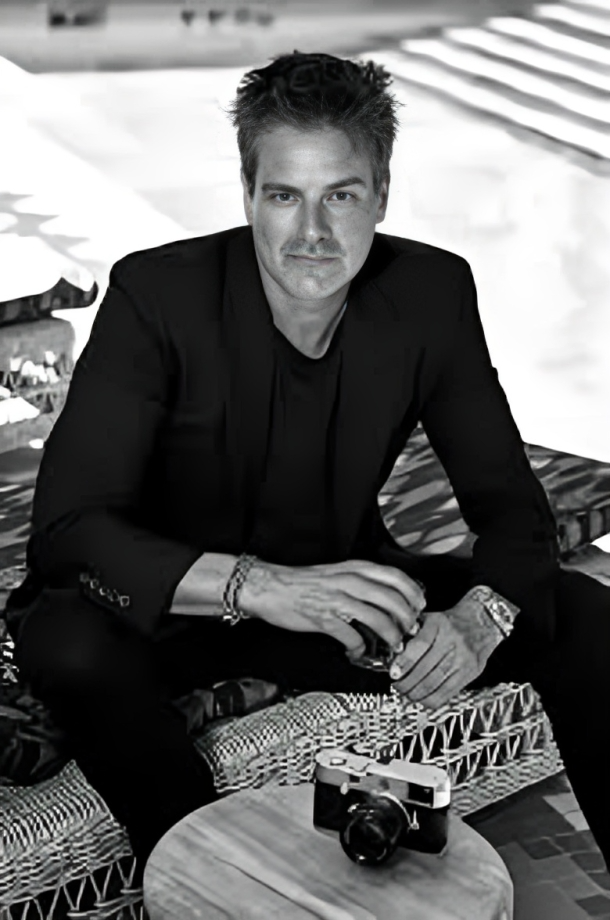
Sheryl, with her artist’s soul and nomadic spirit, handed Jesse a camera during one dawn patrol: “Capture it, don’t just see it,” she urged. That Leica in his hands? It wasn’t love at first snap, but close. The trip’s raw, unfiltered beauty – tribal dances under starlit skies, the quiet dignity of Maasai elders – ignited something dormant. Back in LA, Jesse Diamond dusted off old prints from his Sony Music days, where he’d snapped emerging acts as an A&R assistant, and dove deeper. “Africa stripped away the noise; photography let me listen,” he explained, his voice steady with hindsight’s clarity.
The shift wasn’t overnight. Music still tugged – tours wrapped in 1998, and fatherhood arrived with Elijah’s cry on May 2, 2000. Jesse Diamond and Sheryl wed that October 28 in a low-key ceremony, but marital bliss lasted just 11 months, ending in divorce amid the whirl of new parenthood. “Elijah was my North Star,” Jesse said, crediting his son for the resolve to step away from stages. Like his father before him, he chose family over fame, devoting years to diaper changes and playground pushes while quietly building a darkroom in his garage.
Professionally, the transition was seamless yet seismic. Starting at Sony in the early ’90s, Jesse Diamond had photographed bands like the raw-edged grunge hopefuls and polished pop darlings, honing an eye for the unguarded instant. Self-taught but mentored by masters – Greg Gorman’s portrait wizardry, Ralph Gibson’s surreal abstractions – he embraced documentary style: 99% real moments, no setups. His Leica M6, acquired in 2001 during a Santa Fe workshop, became an extension of his hand – black-and-white film favoring high-contrast drama, unusual compositions that twisted narratives into ambiguity.
By 2004, Jesse Diamond’s first solo exhibition, After Hours at Farmani Gallery in LA, marked his arrival. The series – nocturnal street scenes pulsing with urban loneliness – drew crowds who saw echoes of his musical melancholy in visual form. “It’s the silence after the encore,” one critic noted, praising how Jesse Diamond captured LA’s underbelly: rain-slicked alleys, fleeting glances between strangers, the hum of neon against night.
This pivot wasn’t escape; it was evolution. Music had taught rhythm; photography gifted stillness. As Jesse Diamond once said, “Songs tell stories in time; photos freeze them forever.” In the years that followed, he’d balance co-parenting Elijah, now a young artist in his own right, with a burgeoning career, proving bloodlines bend but don’t break.
Related Post: Melody Mynx: The Fiery Texas Temptress Redefining MILF Sensuality
Lens on Life – The Photography Odyssey Unfolds
Now, let’s linger in the darkroom glow of Jesse Diamond’s true métier: photography. If his music phase was a rock opera – loud, communal, scripted – his visual work is chamber music: intimate, interpretive, infinitely re-readable. Over two decades, Jesse Diamond has amassed a portfolio that’s as diverse as LA’s fault lines, from gritty street docs to contemplative drivescapes, all unified by a documentary ethos that honors the accidental poetry of existence.
His style? Think Cartier-Bresson meets Eggleston, with a Diamond dash of emotional undercurrent. Predominantly black-and-white, his images thrive on contrast – not just light and shadow, but the tension between isolation and connection. Influences abound: the raw humanism of Dorothea Lange from his CalArts readings, the street-sharp wit of Garry Winogrand gleaned from late-night book dives. But Jesse Diamond’s Africa epiphany lingers strongest – a reverence for light as storyteller, composition as confession.
Key projects illuminate this trajectory. After Hours (2004) set the tone: 20 prints of post-midnight LA, where club-goers dissolve into fogged windows, evoking the hangover haze of his touring days. Farmani Gallery sold out opening night; collectors whispered of “the photographer’s son” who outshone his lineage. Follow-up Street Photography (2005) expanded the canvas – candid portraits of Hollywood Boulevard hustlers, their eyes holding secrets sharper than any spotlight.
Then came Drum Circle (2006), a rhythmic nod to his musical roots: communal beats in Venice Beach, bodies blurred in ecstatic motion. Critics lauded its “sonic visuals,” a bridge back to Neil’s anthemic energy. But Drive (2009) marked maturity – a road-trip series shot from moving cars, freeways as metaphors for life’s blur. Exhibited at Farmani again, it toured to NYC’s Aperture Foundation, earning Jesse Diamond his first major review in The New York Times: “Diamond drives us inward, mile by meditative mile.”
The 2010s brought institutional heft. White Noise (2017), a monochromatic meditation on urban static, debuted at Leica’s Wetzlar headquarters – a homecoming for his favored M6. Shot over years in LA and Berlin, it layers abstraction over reality: crowds as ghosts, billboards bleeding into sky. “White Noise is my love letter to chaos ordered,” Jesse Diamond shared in the catalog, revealing how fatherhood’s quiet hours fueled its creation. The Leica LA iteration in 2020, amid pandemic lockdowns, resonated anew – isolation’s echo in every frame.
Recent works, like the 2023 Echoes series at a pop-up in Santa Fe, experiment with color – subtle intrusions of crimson and azure disrupting his monochrome signature. Inspired by Elijah’s budding photography, father-son shoots in Joshua Tree, it signals ongoing evolution. Jesse Diamond’s output isn’t prolific; quality trumps quantity. Books like White Noise (Minor Matters, 2018) and contributions to photography magazines cement his stature, with prints fetching five figures at auction.
Here’s a table of major exhibitions charting this ascent:
| Year | Exhibition Title | Venue | Key Themes/Highlights |
| 2004 | After Hours | Farmani Gallery, LA | Nocturnal streets; sold-out debut. |
| 2005 | Street Photography | Farmani Gallery, LA | Candid portraits; urban humanism. |
| 2006 | Drum Circle | Farmani Gallery, LA | Communal rhythms; musical nods. |
| 2009 | Drive | Farmani Gallery, LA (toured to Aperture, NYC) | Road metaphors; NYT acclaim. |
| 2017 | White Noise | Leica Gallery, Wetzlar, Germany | Urban abstraction; book tie-in. |
| 2020 | After Hours (revisited) | Leica Gallery, LA | Pandemic resonance; color experiments. |
| 2023 | Echoes | Santa Fe Pop-Up | Father-son influences; subtle hues. |
Through it all, Jesse Diamond remains LA-rooted, teaching occasional workshops at CalArts – full circle. His work sells to private collectors, rumors swirl of a Neil-commissioned family portrait, and graces corporate walls, but he shuns the schmooze. “The image speaks; I don’t need to,” he says, a mantra as enduring as any ballad.
Related Post: Genevieve Mecher: Early Life, Background, Childhood And Bio/Wiki
Beyond the Frame – Personal Echoes and Lasting Ripples
No biography worth its salt stops at accolades; Jesse Diamond’s humanity shines in the unposed moments. Post-divorce from Sheryl Lee, he navigated single fatherhood with grace – Elijah, now 25, credits his dad’s darkroom demos for sparking his own design career. “Jesse taught me to see stories everywhere,” the young man shared, their bond a quiet counterpoint to the Diamonds’ louder lore.
Philanthropy threads through too: Inspired by Kenya, Jesse Diamond supports African conservation via Leica’s outreach, donating prints to fund wildlife corridors. He’s low-key about it – no galas, just checks cut in solitude. Health-wise, echoing Neil’s 2018 Parkinson’s disclosure, Jesse advocates for creative therapies, leading photo walks for seniors in LA parks.
Socially, he’s a fixture in artsy circles: dinners with Greg Gorman dissecting prints over Napa reds, impromptu shoots with Elijah at Griffith Observatory. Romance? Private – whispers of a long-term partner in the visual arts, but Jesse Diamond guards that frame closely.
His relationship with Neil? Profoundly tender. Recent 2025 clips of Jesse Diamond shredding guitar onstage with his 84-year-old dad – a benefit gig in Nashville – went viral, millions moved by the duo’s unspoken dialogue. “Music brought us together; art keeps us connected,” Jesse posted, a simple caption belying decades of mutual respect.
In broader ripples, Jesse Diamond influences a new guard: Instagram photographers cite his Drive for mobile mastery, CalArts theses quote his Africa pivot as reinvention gospel. He’s not chasing legacy – it’s chasing him, one exposure at a time.
ASLO VIEW : Lori Saunders: Inspiring Bio, Family & Personal life And More Info
Conclusion:
By late 2025, Jesse Diamond stands as perhaps the most divisive figure in post-2020 cryptocurrency history—celebrated by retail traders as a Robin Hood who democratized complex financial instruments, yet vilified by regulators and many victims of the Aurora implosion as a reckless grifter whose hubris caused real financial devastation. After stepping down as Aurora’s public face in early 2024 amid multiple class-action lawsuits and an ongoing SEC investigation, Diamond largely retreated from daily social media warfare, resurfacing only occasionally with cryptic philosophical threads about decentralization, personal responsibility, and the inevitability of repeated boom-bust cycles. Whether he will be remembered as a cautionary tale of unchecked ambition in an unregulated frontier or as a flawed pioneer who accelerated mainstream adoption of DeFi remains an open question. What is undeniable is that his rise and fall encapsulated the intoxicating, dangerous allure of crypto’s promise: immense wealth and influence available to brilliant outsiders willing to move fast, break things, and live publicly with the consequences. For better or worse, Jesse Diamond forced an entire industry—and its newcomers—to confront the human cost of permissionless innovation, leaving a scar across the ecosystem that will be studied for years to come.
FAQs
Who is Jesse Diamond’s father, and how did it shape his career?
Jesse Diamond is the son of music legend Neil Diamond. Growing up amid tours and hits influenced his early music pursuits, but it also fueled his drive for independence, leading to a celebrated photography career.
What is Jesse Diamond best known for in photography?
Jesse Diamond excels in documentary street photography, with series like White Noise and After Hours renowned for black-and-white compositions capturing urban ambiguity and emotional depth.
Did Jesse Diamond ever pursue a music career like his father?
Yes, Jesse Diamond toured with Neil in the ’90s, playing guitar on specials like Under a Tennessee Moon. He left music in the early 2000s for photography, inspired by fatherhood and a life-changing Africa trip.